
For the owners
- $37.5M from the fractional stake, plus a loan against part of the rest
- Kept 75% of the painting
- No public auction
- The painting secured and insured in a vault
Case study · Illustrative
How a family put a Renaissance painting worth $150M to work without selling it: a fractional stake for investors and a loan against the rest, while the painting stayed in a vault.
The starting point
The Rothmere family had owned the painting for generations. It was worth more than everything else they held, and it earned nothing: it sat in storage, cost money to insure and protect, and could only become capital through a public auction they did not want.
They wanted to fund new investments while keeping the painting in the family.
How it happened
The family submitted the painting through List an asset and completed identity checks.
A provenance researcher traced the painting's ownership back through the family and earlier collections, checked it against the catalogue raisonné and its exhibition history, and searched stolen and looted art registers. ACAN recorded the report and the researcher's credentials.
Independent experts examined the work and a laboratory analyzed the panel and the paint. Their opinions on attribution and date were recorded with their credentials. ACAN does not decide authenticity; it records who examined the work and what they found.
A condition report and high-resolution imaging created a fingerprint of the physical work, and an independent appraisal valued it at $150.0M.
The painting moved to a licensed custodian's bonded vault, where its fingerprint was checked again on arrival. An SPV took title. Arrabon never held the painting.
A licensed issuer offered 25% of the SPV, $37.5M, to verified, accredited investors on the ACAN marketplace. 86 investors took a position.
The family pledged part of its remaining 75% as collateral for a loan from a licensed lending partner, raising more capital while keeping ownership.
With no rent to pay out, the events that matter are custody checks, condition reports, insurance renewals, loans, exhibitions and any sale. The painting is re-appraised periodically, and the investor app shows the latest value.
In the investor app
A holder's 30 tokens show the painting's latest appraised value. In this illustration it is up 14.8%, but art values can fall as easily as they rise.
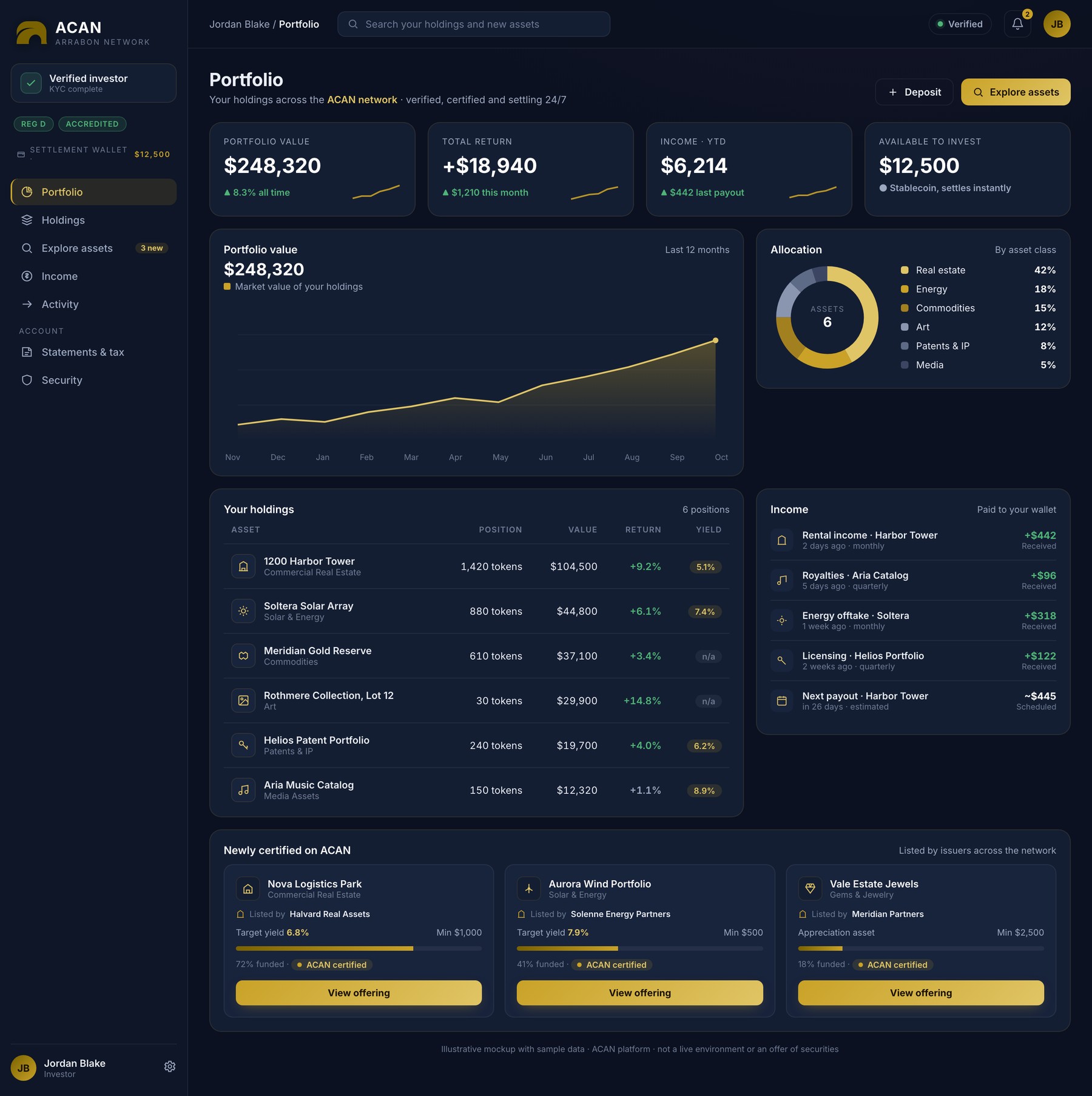
Rothmere Collection, Lot 12 in the investor app: no yield, only the latest valuation. Illustrative screens with sample data. Click or tap to enlarge.
The outcome
Honest about the limits
Attribution can still be challenged. New scholarship can change how a work is attributed, and its value with it.
There is no income. The only return is a change in value, which can be negative.
Art is illiquid. Buyers for a stake can be scarce, and a sale may take time or not happen at all.
Physical risk remains. A vault reduces the risk of damage or loss but does not remove it, and insurance terms matter.
None of this is financial, legal or tax advice. See our full risks and disclosures.
List an asset
Tell us about it in a few minutes. Every asset goes through ACAN certification before it can be offered.